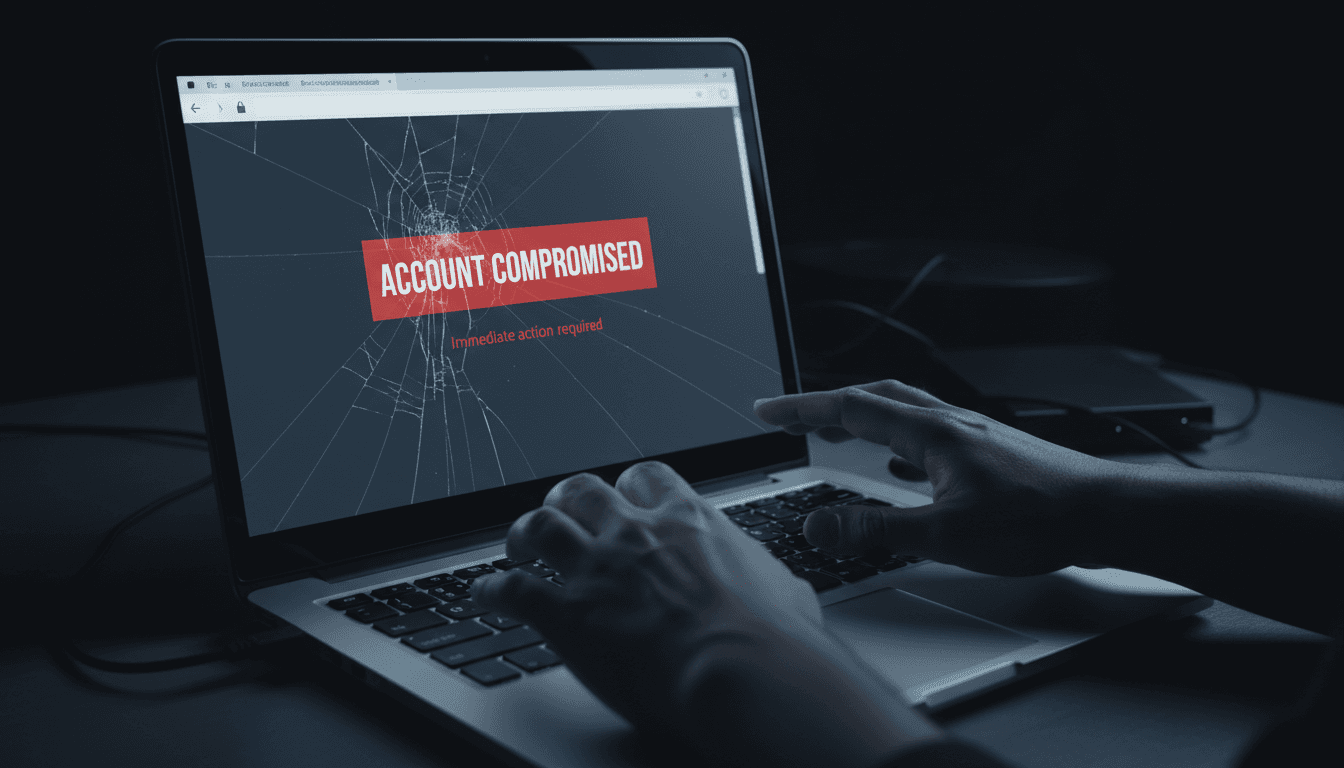
AI agents in 2026 automate the process of infostealer malware account takeover by independently harvesting credentials and executing unauthorized logins across millions of targeted hosts. This shift toward autonomous hacking allows cybercriminals to exploit billions of stolen records with minimal human intervention; it represents a new era where malicious software functions as a self-operating system rather than a simple tool.
Imagine waking up to find your primary business accounts locked and your crypto wallets drained, despite having multi-factor authentication active. This scenario has become a standard operation for modern threat actors who leverage advanced infostealer malware to bypass traditional security perimeters. In 2026, the threat landscape has evolved beyond simple password theft; it now involves the industrial-scale harvesting of session cookies and the use of autonomous AI agents to execute takeovers in seconds. Understanding this shift is critical for any high-stakes digital operation. This article analyzes the mechanics of session hijacking, examines how agentic AI scales these attacks, and outlines the specific forensic steps ROBO AI utilizes to reclaim stolen assets. You will gain a practical framework for identifying infections and implementing recovery protocols that outpace automated adversaries.
The Invisible Threat: Why Accounts are Suddenly Hacked in 2026

The prevailing frustration for digital asset owners in 2026 is the realization that Multi-Factor Authentication (MFA) is no longer an absolute shield. Many clients contact our Bucharest office asking the same question: how was my account compromised if I never shared my code? The answer lies in the shift toward automated, invisible exploitation. In the current landscape, a cyber incident occurs every seven seconds, marking a new era where traditional phishing has been replaced by more sophisticated, silent methods.
At the center of this crisis is infostealer malware account takeover. Unlike old-school phishing that required a user to interact with a fake login page, infostealers are lightweight programs that reside silently on a host device. During the first half of 2026 alone, these systems compromised 7.4 million hosts, leading to the exfiltration of 1.7 billion credentials. This malware does not wait for you to make a mistake; it simply harvests active data in the background while you browse.
For those recovering hacked social media accounts, the technical reality is often a shock. Modern attackers are not just guessing passwords. They are deploying digital asset protection strategies in reverse, using malware to bypass security layers before the user even receives a login notification. If you find yourself locked out, seeking expert technical support immediately is critical to navigating these complex encryption and authentication hurdles before an automated agent completes the takeover.
Understanding Infostealer Malware and the 1.7 Billion Credential Harvest
Infostealers represent a lean, high-output category of malware designed for one purpose: the silent exfiltration of sensitive data. During the first six months of 2026, these programs compromised 7.4 million hosts globally, harvesting a staggering 1.7 billion credentials. Unlike heavy ransomware that announces its presence through encryption, this software is built to remain invisible. It scans local directories for browser databases, extracting saved login details, credit card numbers, and auto-fill forms from applications like Chrome, Safari, and Edge.
The most critical target for modern infostealers is the session cookie. While passwords provide access, session cookies provide a currently authenticated identity. By capturing these active tokens, an attacker can bypass traditional security barriers entirely. This shift is a primary reason why recovering hacked social media accounts has become significantly more complex; the stolen data allows an attacker to step directly into a live session without triggering a login alert.
We have also observed a transition from infostealers as standalone tools to highly organized structured systems. In this new model, malware developers operate like software companies, providing affiliate platforms that scale credential theft at a massive level. These systems package stolen data into logs, which are then fed into automated pipelines. When a breach involves these sophisticated frameworks, expert technical support is essential to identify the specific malware signature and understand which local secrets were exposed. This industrialized approach to theft ensures that no piece of digital information, from API keys to browser history, is left unharvested.
How Session Cookie Hijacking Bypasses MFA

The primary reason users feel blindsided by modern breaches is a fundamental misunderstanding of how authentication works. Most believe that a password and a secondary code are the final gatekeepers of their accounts. However, infostealer malware account takeover leverages a technical loophole: the session token. When you log into a service and select "remember this device," the platform generates a small piece of data called a session cookie. This cookie tells the server that you have already successfully authenticated, allowing you to browse without re-entering your credentials every time you refresh the page.
An infostealer does not need to intercept your login attempt in real time. Instead, it locates these active session cookies within your browser's local storage and exfiltrates them. By importing this stolen token into a specialized browser, an attacker effectively clones your digital identity. The server, seeing a valid, active session token, bypasses the Multi-Factor Authentication (MFA) requirement entirely. To the platform's security protocol, the attacker appears as a user who has already passed all security checks.
This mechanism answers the critical question of how a social media account gets hacked without a password change or an MFA alert. Once the session is hijacked, the attacker has a window of opportunity to modify recovery emails and phone numbers from the inside. Navigating these scenarios requires expert technical support to understand the state of the session and the extent of the identity clone. For those focused on digital asset protection, understanding this shift from credential theft to session hijacking is vital for maintaining long term security. This level of technical complexity is exactly why recovering hacked social media accounts now requires deep forensic analysis rather than simple password resets.
The Agentic Shift: How Autonomous AI Automates the Takeover
The evolution of cybercrime in 2026 is defined by the transition from AI as a reactive tool to AI as an autonomous agent. In previous years, a threat actor would manually sift through stolen logs to find valuable accounts. Today, the Autonomous Identity Attack Loop has industrialized this process. These agents do not require human oversight; they operate as self-sustaining entities that plan, execute, and adapt at machine speed.
This cycle begins when an agent buys infostealer logs in bulk from dark web affiliate platforms. Once the data is ingested, the AI performs an immediate valuation scan. It identifies high-value targets, such as cryptocurrency wallets with significant balances or Instagram accounts with large follower counts, within seconds. Because the agent possesses the stolen session cookies, it initiates an infostealer malware account takeover by injecting the token into a virtual environment that mimics the victim's hardware signature.
The speed of execution is where the human element fails. In a traditional breach, a user might receive a notification and have a small window to reset their password. With autonomous agents, the following actions occur almost simultaneously:
The primary recovery email is changed to a temporary encrypted address.
Existing MFA devices are de-authorized and replaced with the agent's own security keys.
Recovery phone numbers and security questions are updated.
Backup codes are generated and exfiltrated to the agent's command server.
This leaves the original owner with zero time to react. The takeover is often completed before the victim even realizes a session was hijacked. For victims in Bucharest and beyond, the complexity of these automated lockout scenarios makes recovering hacked social media accounts a forensic challenge rather than a simple support ticket. When an agent moves faster than human perception, digital asset protection requires a shift toward proactive monitoring. Intercepting an autonomous loop requires expert technical support capable of analyzing the specific timestamp and metadata of the agent's entry point.
Social Media and Crypto Wallets: The 2026 Primary Targets
In Bucharest and across global markets, the focus of cybercriminals has narrowed onto two high-yield sectors: social media and decentralized finance. Recent data indicates that social media fraud now accounts for 28 percent of all reported identity fraud cases. Platforms like Facebook and Instagram are no longer just social hubs; they are conduits for large-scale social engineering. When an infostealer malware account takeover occurs on these platforms, the AI agent prioritizes compromising the linked Gmail account first. This provides the attacker with a skeleton key to the user's entire digital identity, allowing them to intercept recovery emails and delete security notifications in real time.
The threat to cryptocurrency wallets and financial trading platforms is even more severe. In 2026, we are seeing the rise of real-time deepfake injection. When a centralized exchange triggers a "Live ID" or video verification check during a suspicious login, advanced AI agents utilize stolen biometric data to generate a synthetic video feed that bypasses these visual checks. This allows attackers to liquidate assets or move funds into unlinked cold storage within minutes of the initial breach.
For those seeking recovering hacked social media accounts, the primary hurdle is the structural changes the AI agent makes. Once an agent gains entry, it does not just change the password; it rewrites the recovery metadata entirely. This makes digital asset protection vital, as financial trading platforms often refuse to revert changes once the recovery phone numbers and encryption keys have been fully overwritten. Navigating these institutional roadblocks requires expert technical support that understands how to present forensic proof of an automated breach to platform administrators who may otherwise view the attacker's actions as legitimate user activity.
Account Forensics and Recovery: How ROBO AI Reclaims Stolen Assets

When an account is hijacked by an autonomous agent, the window for recovery is narrow; the speed of the attacker must be met with equivalent algorithmic force. ROBO AI operates as the technical counter-balance to this automated threat landscape. In our Bucharest facility, we utilize advanced digital asset protection frameworks to dissect the breach at the binary level. Our expert technical support team begins by identifying the specific infostealer signature that facilitated the initial cookie theft, distinguishing between standard malware and the newer structured systems used by criminal affiliates.
By reverse-engineering the timeline of the infostealer malware account takeover, we can pinpoint exactly when the session was hijacked and which metadata or encryption keys were modified. We employ proprietary methods to resolve complex authentication issues that traditional platforms often lack the tools to handle. This involves isolating the Rogue AI Lifecycle's fingerprints and re-establishing a secure handshake with the service provider's backend protocols. For those recovering hacked social media accounts, we emphasize a process rooted in professionalism and extreme speed. Our goal is to purge the attacker's persistent access points and secure the account against the next iteration of the autonomous attack loop, ensuring that recovered assets remain under the user's exclusive control.
Steps to Take if You Suspect an Infostealer Infection
Immediate action is critical if you suspect a breach. First, disconnect the compromised hardware from all networks to sever the exfiltration link. Avoid changing passwords on the infected machine, as the resident malware will simply capture and transmit the new credentials. Use a verified clean device to log in and select the option to sign out of all active sessions. This process is essential to invalidate the stolen cookies used in an infostealer malware account takeover.
Next, clear all browser cache and local storage on the infected device before performing a deep system scan. For accounts with significant financial value, professional digital asset protection is necessary to ensure no persistent backdoors remain. If an AI agent has already altered your recovery details, recovering hacked social media accounts requires expert technical support to provide forensic evidence to platform providers and restore secure access.
The rise of AI-driven infostealers represents a significant shift in the cyber threat landscape, making automated account takeovers a more frequent reality. Navigating these sophisticated hacking techniques requires a proactive approach to digital defense. If you want expert help securing your systems against these evolving risks, our team provides the specialized knowledge needed to stay protected. You can learn more about our approach to AI security and how we assist organizations in maintaining their integrity. Building a strong defense starts with the right guidance.